
About
About the Technique
The technique of mindfulness meditation is a 2,500-year-old tradition that began with the teachings of the Buddha. The basic practice is to learn to place attention on the present moment and to see what arises without judgment or bias. Practicing mindfulness gives us the strength to see things as they are, not as we would like them to be. With that foundation, we can approach whatever arises in our lives with confidence, knowing that we can see things clearly. This confidence often manifests as less reactivity and less confusion in one’s life.
As this practice spread, it evolved to meet the various cultures, traditions, and beliefs of people all around the world. Here in the West, mindfulness is usually viewed as a secular practice that can complement whatever religious tradition a person holds. It can also stand apart from any religious framework. Anything is workable.
Here in Columbus, Ohio, Mindful with John, LLC is a small company whose mission is to teach core techniques of mindfulness meditation and related practices. Two formats can be used to work with the mind and are offered to students:
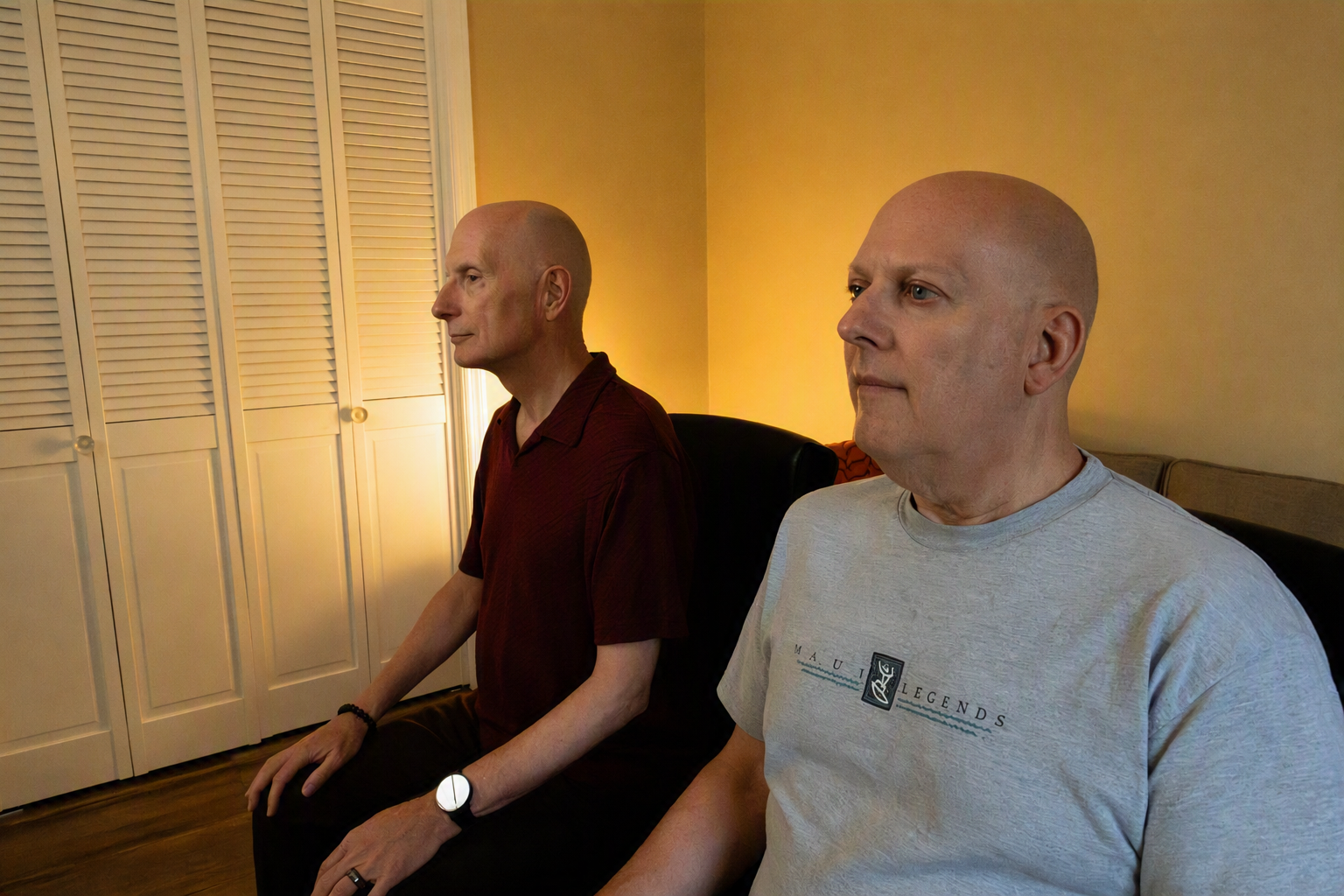
Individual instruction is available for students. This provides the opportunity to not only learn the teachings and practices, but to also contextualize them in one's own life. The foundations of mindfulness meditation are first presented. Then through discussion, the student can begin to identify obstacles to their path as well as opportunities to extend strength, confidence, and focus to life "off the cushion". Individual instruction is NOT:
Therapy or psychological counseling.
Pastoral care.
An alternative to professional medical care.
Intended to go past the core practices of mindfulness.
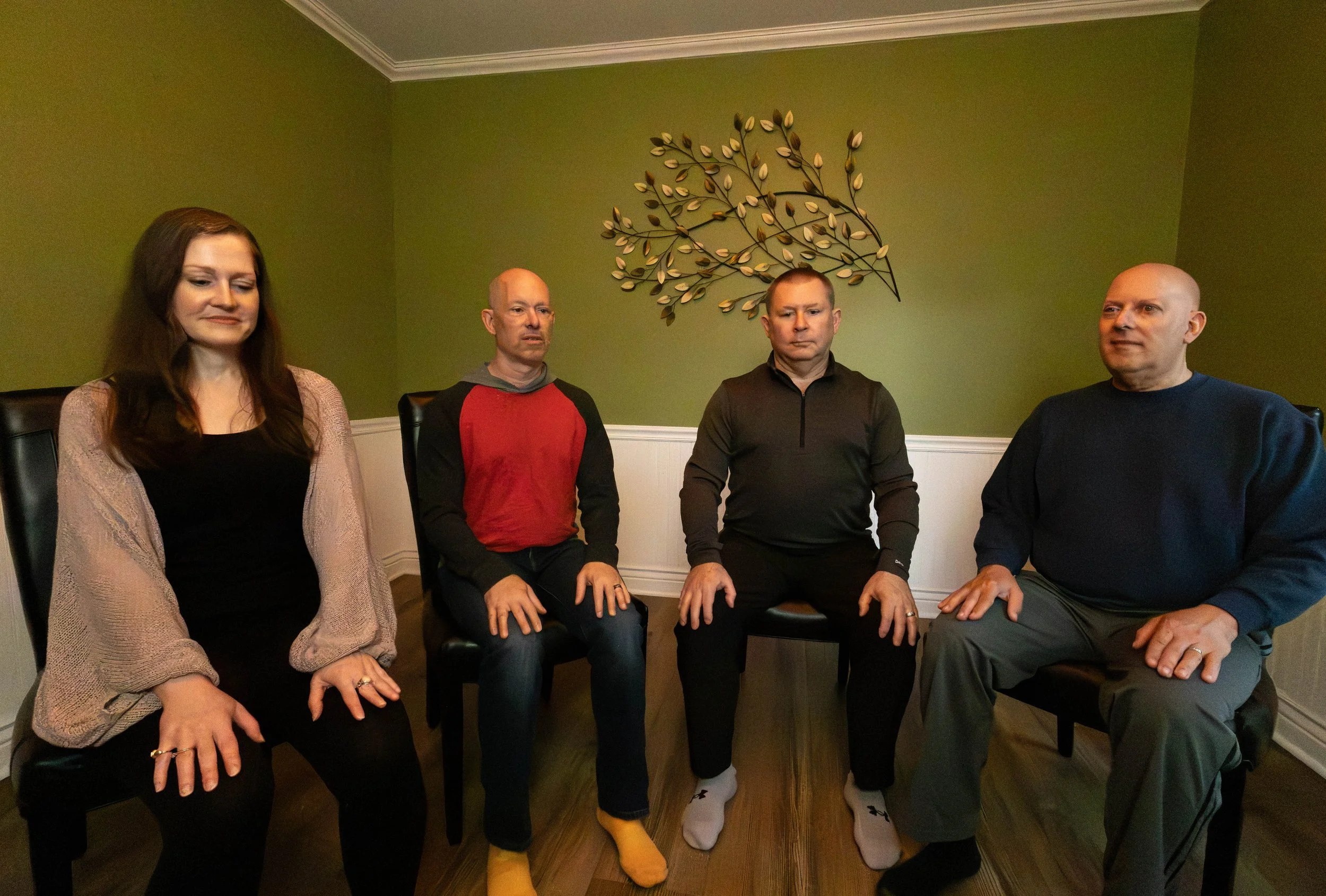
Group instruction allows for practicing together with others who seek to learn mindfulness meditation. Based on demand and available facilities, group instruction provides a sense of community and shared learning. In order to provide a space that works for everyone, certain agreements around consideration, confidentiality, and decorum will be presented at each session. Group instruction is NOT:
A congregation or religious gathering.
Group therapy.
A social event.
Both individual and group instruction can be done in person or online through the Zoom platform. Some group events will be open to the public while others may be limited to members of particular organizations. All Mindful with John, LLC programs are welcoming and inclusive. The dignity and worth of every person is upheld, and no form of discrimination, bigotry, hate speech, or intolerance will be permitted. This is a safe place for all, (See the Mindful with John Code of Ethics below for more details.) If you have additional questions, please feel free to contact us.
About the Teacher
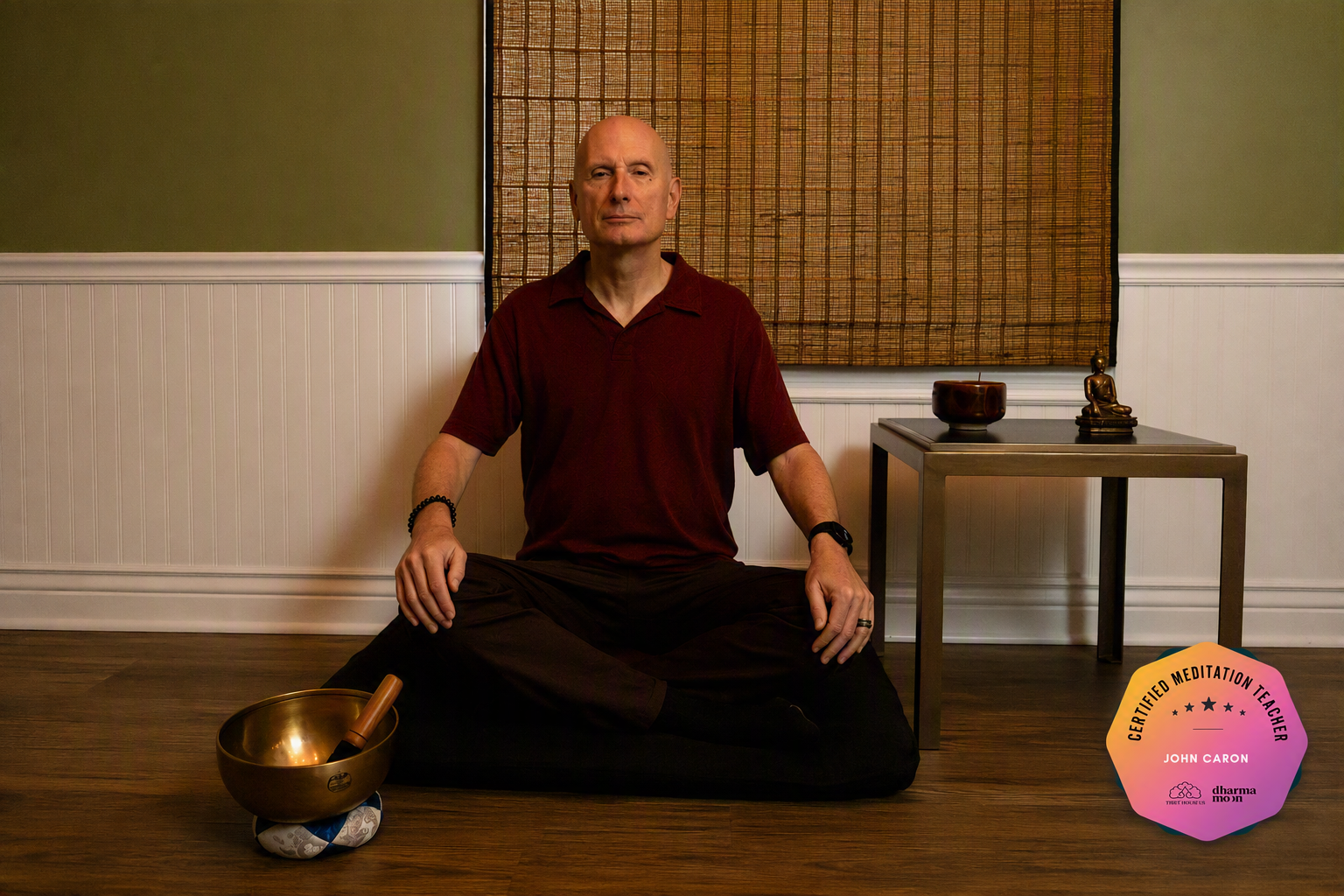
John Caron has been practicing mindfulness and other meditation techniques since 2012. He holds a Bachelor's Degree in Psychology and Religion from Capital University, a Master of Divinity degree from Trinity Lutheran Seminary, and a Master of Alcohol and Drug Abuse Ministry degree from the Methodist Theological School of Ohio. In addition, he has completed Year One and Year Two of Dharma Moon's Buddhist Studies courses. He also holds a mindfulness meditation teacher certification from Dharma Moon and Tibet House (established as the U.S. center for H. H. the Dalai Lama).
John has taught in diverse settings, including churches, sanghas, and online communities. He has taught mindfulness meditation practice, metta meditation, tonglen meditation, and windhorse practice. He has also presented instructional material on the intersections of meditation practice and Christianity. While not an ordained pastor, John is very comfortable speaking to church groups about mindfulness meditation and how it can be used to augment one's Christian faith.
As a member of the LGBTQIA+ community, John also integrates mindfulness meditation with queer identity and the unique challenges queer people face in today’s American political landscape. Mindfulness is about meeting the present moment with courage and confidence. Meditation helps people see clearly what is happening in the current moment and allows them to respond to that moment with clarity of vision.
Code of Ethics
I agree to the following code of ethics:
I agree to have a sincere commitment to provide the highest quality care to those who seek my professional services.
I agree to represent my qualifications honestly and provide only the services that I am qualified and certified to perform.
I agree to refrain from recommending treatment, diagnosing a condition, or suggesting a student disregard medical advice.
I agree to acknowledge the limitations and contraindications of meditation and refer students to the appropriate healthcare professionals when necessary.
I agree to consistently maintain and improve my professional knowledge and competence through continued education, training and personal practice.
I agree to conduct my business and professional activities with honesty and integrity. I agree to not discriminate against students; but rather to foster diversity, equity, and inclusivity within my classes, agreeing to respect students’ boundaries with regard to privacy, disclosure, emotional expression, and beliefs.
Since effective meditation teaching might involve some physical contact applied in an atmosphere of safety. I agree that it is my responsibility as a teacher to create and maintain a safe environment that engenders trust and mutual respect between teacher and student.
I agree to offer compassionate, competent, and safe touch to my students when/if assisting them in meditation classes with the students’ explicit permission.
I agree an essential aspect of teaching meditation is the development of a professional teacher/student relationship. This includes establishing clear and appropriate social and sexual boundaries.
I agree to refrain, under all circumstances, from initiating or engaging in any sexual conduct, sexual activities or sexualizing behavior involving a student even if the student attempts to sexualize the relationship.
I agree and understand that all actions that breach the principles of this Meditation Teacher Ethics agreement will be fairly investigated. I understand that if the situation warrants, my certification with Dharma Moon/Tibet House may be revoked or restricted.
Protecting Confidentiality
As was previously shared, the nature of meditation promotes physical and psychological growth through which profound transformation can occur. Students may share information that is of a deeply sensitive and personal nature. It is my responsibility to protect this information in order to maintain the integrity of the student/teacher relationship and to act in the best interest of my students.
I will never disclose any information shared by a student to anyone else. This includes group and private sessions, without their explicit permission.
In a group context, I will announce to participants that whatever is shared by others during the class should not be repeated or disclosed outside the class.
I will not leave my computer/devices containing confidential information open to others.
Should there be a significant risk of a student harming themselves or others, it may be necessary to contact and seek emergency services.
Commitment to Diversity, Equity, and Inclusivity
I believe that creative expression, spiritual development and mastery of everyday life have equal weight. I believe that investing in diversity and inclusion will help to create a better community and educational experience for everyone. Ultimately, I am committed to creating and sustaining a culture where diversity, equity, and inclusivity are integrated into the very fabric of my practice, including a diverse representation of all backgrounds, identities, and perspectives.
I recognize that creating an inclusive culture is not passive, finite, or my sole responsibility. I believe that every person at every level of engagement is responsible for championing and amplifying diversity, equity, and inclusion in our community, company and beyond. With each of us doing our part, we can ensure that we are building an inclusive culture that drives learning, growing, and development in tandem with kindness, care and compassion.
I will strive to foster a culture of clear compassionate feedback that supports the commitment to diversity, equity, and inclusivity. Here are some ways that you can advocate for DEI in our classes, programs, and community gatherings:
Commit to creating a culture that supports inclusion and equity by participating in DEI programs and training.
Recognize, acknowledge, and hold yourself accountable for your own biases, insensitivities, and blindspots.
Recognize, acknowledge and hold others accountable for their biases, insensitivities, and blindspots by speaking out.
Create a safe and welcoming space, free from justment and negative consequence, for others to speak out against biases, insensitivities, and blindspots.
Advocate for others who are not comfortable advocating for themselves (with permission).
Speak out when there is a lack of representation in a Mindful with John, LLC environment.
Invest in diversity within wellness by participating in community outreach efforts.